
Steel Garage Doors: Pros, Gauges & Finishes
Why steel is the default in San Antonio, what the gauge numbers actually mean, and which finishes survive our sun.
Why most doors we install are steel
Steel hits the best balance of cost, durability, and maintenance for San Antonio homes. It does not rot or warp in humidity, it takes factory finishes that hold up in UV, and it is the only material where insulated, hurricane-rated, and budget options all exist in the same product family. Wood wins on warmth, glass wins on drama, and steel wins on the math for nine out of ten houses.
The honest downside: steel dents. Basketballs, hail, and bumper taps all leave marks, and a deep dent in a visible panel usually means a panel swap rather than a repair.
One, two, or three layers
One sheet of stamped steel. Lightest and cheapest, fine for detached garages, and the easiest to dent.
Steel plus a polystyrene insulation backing. Quieter, stiffer, and the sweet spot for most attached garages.
Steel skins front and back with insulation bonded between them. The quietest, stiffest, and most dent-resistant build, and what we recommend for living-space adjacency.
Lower number, thicker steel
Steel gauge runs backwards: a 24-gauge door is thicker and stronger than a 26-gauge door. Builder-grade doors across the North Side are often 26 or 27 gauge, which is why they show hail dents and oil-canning waviness after a few summers. Stepping to 24 gauge costs less than people expect and pays off every hail season.
If you are comparing quotes, ask for the gauge and the layer count in writing. Two doors can look identical in a brochure and be completely different products.
What holds up in Texas sun
The standard finish. Holds color well; lighter colors fade slowest on west-facing doors.
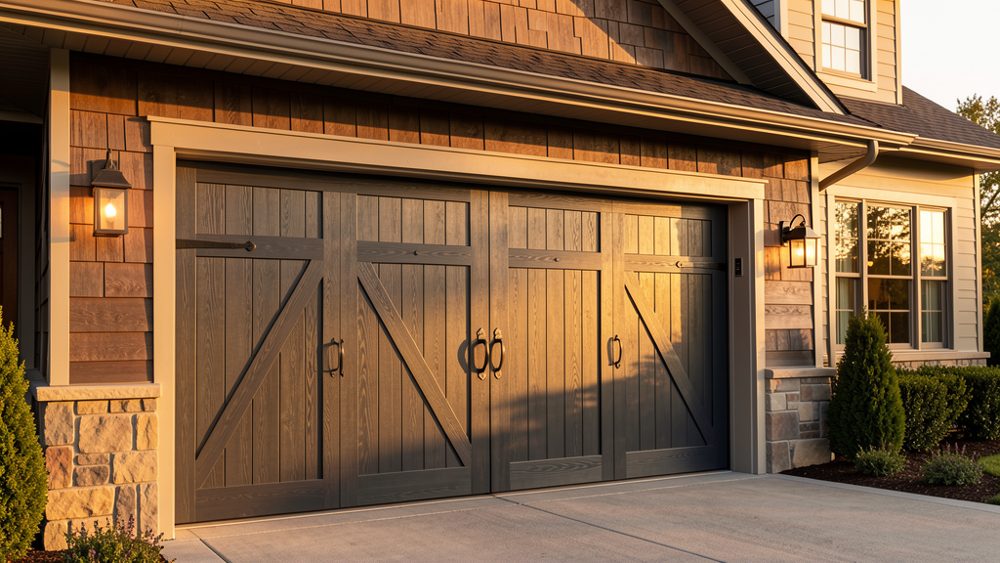
Composite or molded overlays that read as wood from the street without the wood maintenance. See our wood and faux-wood page for the full comparison.
Woodgrain texture stamped into the steel. Hides minor dents and dust better than smooth panels.
Available on many lines for matching trim. Dark colors get hot to the touch in August; that is physics, not a defect.
How steel handles a San Antonio year
Hail is the real test here. Thicker-gauge and triple-layer doors shrug off storms that dimple builder-grade panels, and individual damaged panels can be replaced without swapping the whole door. Storm damage is also one of the few garage door events homeowners insurance commonly covers; our Texas insurance guide explains how those claims usually work.
Care is simple: wash it a couple of times a year (how to clean a garage door) and touch up chips before rust starts. Galvanized steel resists rust well, but a scratched panel left bare in humidity will eventually bloom.
What steel doors run, nationally
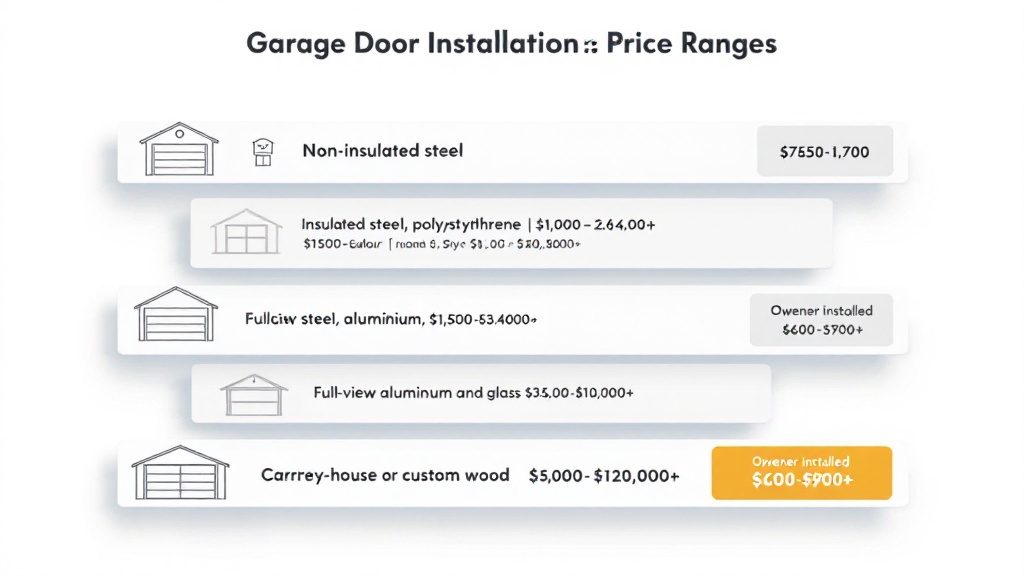
Nationally, most homeowners pay between $800 and $2,500 for a steel door installed, with single-layer single-car doors at the bottom and insulated triple-layer doubles at the top. Those are typical US ranges, not Summit quotes. Size, gauge, insulation, windows, and finish all move the number, and we quote the full installed price before work starts.
Comparing options? Bring us a quote you already have and we will tell you exactly what it does and does not include. Get a straight quote.
FAQ
Do steel garage doors rust?
Modern steel doors are galvanized and factory-finished, so rust is rare on intact panels. Rust shows up where the finish is compromised: deep scratches, chips, and the bottom panel that sits in standing water. Touch up damage promptly and wash the door a couple of times a year, and a steel door in San Antonio should stay rust-free for decades.
What gauge steel garage door is best?
For our market, 24-gauge is the sweet spot: thick enough to resist hail dents and daily abuse without a big price jump. Builder-grade 26 and 27 gauge doors dent easily and oil-can in the heat. Remember the numbers run backwards, so 24 gauge is thicker than 26. Ask for the gauge in writing when comparing quotes.
Can hail damage a steel garage door?
Yes, especially thin builder-grade panels. The good news is that steel doors are sectional, so one or two dented panels can be replaced without a new door, and hail damage is commonly covered by homeowners insurance in Texas. Thicker-gauge and triple-layer doors survive storms that visibly dimple cheaper doors.
Can I paint a steel garage door?
Yes, and it is one of the cheapest curb-appeal upgrades there is. Clean and degloss the factory finish, use a quality exterior acrylic latex, and avoid painting in direct summer sun or dark colors on doors with polystyrene backing, since heat buildup can warp panels. Our painting guide in the maintenance library walks the whole process.
Your garage door won’t wait. Neither do we.
We keep same-day openings when the board allows. Either way: diagnosis first, written price second, then the fix.