
Annual Garage Door Maintenance Checklist
Every task that keeps a garage door alive in Texas, grouped by how often it needs doing.
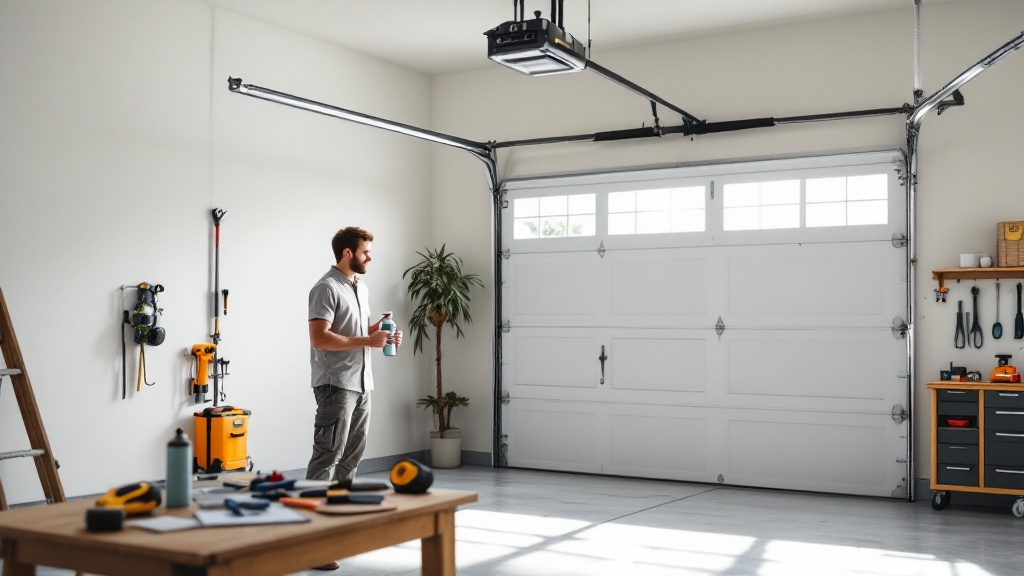
One page, three lists, about an hour a year
This is the printable version of our full maintenance guide. Everything is grouped by frequency: monthly five-minute checks, twice-a-year tasks, and the annual once-over. Do the monthly list and you’ll catch problems while they’re still cheap.
The only tools you need: a stepladder, a socket wrench, a soft cloth, a 2×4, and garage-door-rated lubricant. If any step turns up something broken, stop there and read the relevant guide before touching anything else.

The five-minute check
Pick a day you’ll remember. First Saturday of the month works. Run the door once and check these five things:
- Watch one full cycle. The door should move smoothly with no jerking, scraping, or hesitation. New noises mean something changed.
- Test the safety reverse. Lay a 2×4 flat where the door closes. The door must reverse on contact. No reverse, no opener use until it’s fixed.
- Test the photo eyes. Wave a broom through the sensor beam while the door closes. It should reverse instantly.
- Wipe the sensor lenses. Dust and spider webs cause half the “door won’t close” calls we get.
- Look at the springs and cables. Look, don’t touch. A gap in the spring coil or frayed cable strands means book a repair, not a DIY session.
Spring and fall tasks
Time these with the seasons: once before hail season, once before the first freeze. Texas swings are hard on metal and rubber, and these tasks are the countermove.
- Lubricate the moving metal. Hinges, roller stems (not nylon wheels), spring coils, and the opener’s chain or screw if equipped. Full walkthrough: lubrication guide.
- Check the bottom seal. Brittle, cracked, or daylight visible under the closed door means it’s done. Our heat destroys these.
- Inspect weatherstripping. The vinyl stop molding around the frame should flex, not crumble.
- Tighten hinge and bracket bolts. Vibration loosens them over months. Snug them; don’t overtighten into the door skin.
- Test door balance. Pull the release cord and lift the door halfway by hand. It should stay put. A door that slams or shoots up has a spring problem: call a pro.
The annual once-over
These are the items most homeowners either can’t check safely or can’t judge by eye. This is what a professional tune-up covers, and it’s the list to bring up when you book one:
- Spring tension and cycle health. A tech can tell how much life is left before the bang.
- Cable inspection at the drums. Fraying starts where you can’t see it from the floor.
- Opener force and travel settings. Drift here is why doors start reversing for no reason or closing too hard.
- Roller wear check. Flat-spotted or wobbling rollers get flagged before they chew the track.
- Battery backup test. If your opener has one, it only matters during an outage. Test it before storm season.
Anything on this list involving springs, cables, or bottom brackets is not DIY. That’s not upsell talk; it’s where the injuries happen.
Items specific to San Antonio
Generic checklists skip the stuff our climate does to a door. Add these to your routine:
- After any hailstorm: photograph dents and panel damage before touching anything. Insurance wants documentation. Prep guide: storm season prep.
- Before a freeze: lubricate and check that the bottom seal isn’t frozen to the driveway. A frozen seal rips when the opener pulls.
- In peak summer: listen for slower opener movement. Heat is hard on capacitor health, and August is when weak openers die.
- Year-round: keep the track area swept. Wind-blown grit on the North Side acts like sandpaper on rollers.
Related guides and services
Your garage door won’t wait. Neither do we.
We keep same-day openings when the board allows. Either way: diagnosis first, written price second, then the fix.