
Torsion vs Extension Springs: What Your Door Has
Two spring systems lift every garage door. One minute with your eyes tells you which you have, and why it matters for safety and repair.
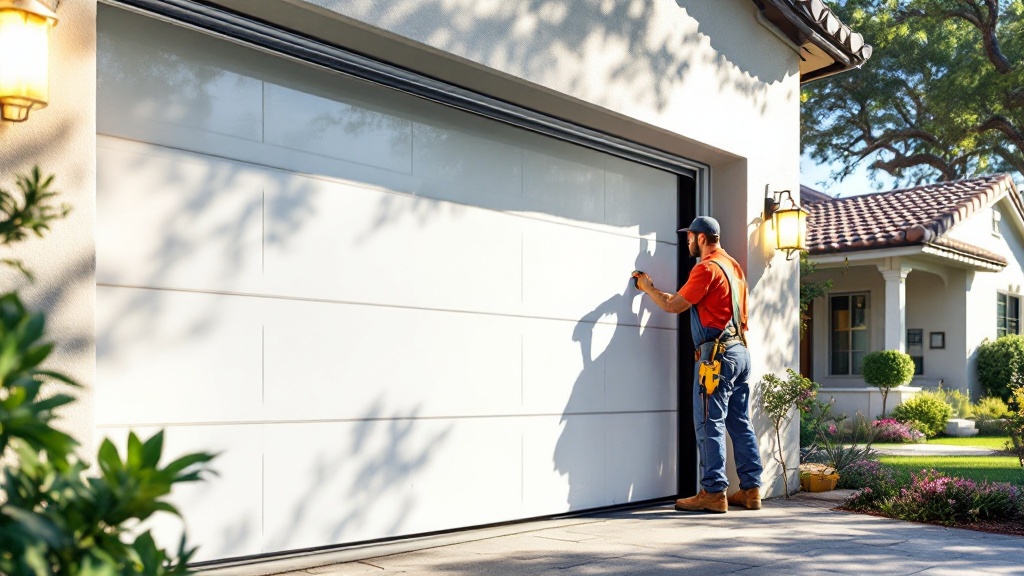
Every garage door is a counterweight system
Your garage door weighs 130 to 400 pounds. The opener doesn’t lift that weight; the springs do. Springs store energy when the door closes and release it when the door opens, making a 300-pound door feel like 10 pounds to lift by hand. The opener just nudges a balanced door along.
Two systems do this job, and they look completely different. Which one you have determines how repairs work, how long parts last, and how dangerous a failure is.
Torsion vs extension, honestly compared
Torsion: on a metal shaft above the door opening. Extension: stretched along the horizontal tracks on each side.
Torsion: one or two fat coils around the shaft. Extension: two long skinny springs that stretch as the door closes.
Torsion: roughly 15,000 to 20,000 cycles. Extension: roughly 10,000 cycles. A busy household hits 1,000+ cycles a year.
Torsion: snaps with a bang, stays on the shaft, contained. Extension: can fly off as a projectile if there’s no safety cable through it.
Torsion: more expensive parts, longer-lived, smoother door. Extension: cheaper parts, more hardware, absolutely needs safety cables.
How to tell in one minute
Stand in the garage with the door closed and look:
- Look above the door opening. A steel shaft with one or two big springs coiled around it means torsion. This is what most modern doors have.
- Look along the horizontal tracks. Long springs running parallel to the tracks, one per side, means extension. Common on older and builder-basic doors.
- Count the torsion springs. Two springs on the shaft means a heavier door. When one breaks, the door still won’t lift safely; both get replaced together.
- Check for safety cables on extension springs. A thin cable should run through the middle of each extension spring. No cable means a snapped spring becomes a whip. That gets fixed now.
Both systems are pro-only. Full stop.
We tell homeowners how to fix sensors, lubricate hinges, and test balance. Springs are different. A wound torsion spring stores enough energy to cause severe injury, and the winding bars can slip in untrained hands. Extension springs under stretch can take off fingers or worse when hardware lets go.
There is no safe DIY version of spring replacement, and the videos that make it look easy skip the part where it goes wrong. If your spring has snapped, the rules are here: can you use the door with a broken spring? Short answer: no. What a proper replacement includes: spring replacement service.
Why springs die on schedule here
Spring steel fatigues with cycles, but temperature swings accelerate it. San Antonio’s pattern of 100-degree weeks followed by a hard freeze is a spring killer: the cold snap is when tired springs finally let go, which is why our phones light up after the first real freeze every year. Heat also dries the lubricant off coils, and dry coils bind, pop, and wear faster.
Twice-a-year lubrication and a balance check extend spring life meaningfully. Both are in a tune-up: tune-up and safety inspection. Hearing a bang from the garage? Contact Summit Garage Doors.
The spring system, covered
Your garage door won’t wait. Neither do we.
We keep same-day openings when the board allows. Either way: diagnosis first, written price second, then the fix.