
Belt Drive vs Chain Drive Garage Door Openers
The honest comparison: noise, cost, durability, and the thing that matters more than the drive type.
Both lift the door. They differ everywhere else
Chain drives cost less and take abuse; belt drives run much quieter and need almost no maintenance. For a detached garage or a budget decision, chain is fine. For an attached garage with a bedroom above it, belt is worth the modest premium. That is the whole argument in two sentences.
Everything below is the detail behind those two sentences, including the part most comparison articles skip: the drive type matters less than the door it is lifting.
Belt vs chain, category by category
Belt wins clearly. A chain drive rattles and telegraphs vibration through the framing, which is exactly what you hear in the room above the garage.
Chain units run less, and the gap on the installed price is usually modest. Ask for both numbers before deciding.
Both last for years on a balanced door. Chains need an occasional tension check; steel-reinforced belts rarely stretch.
Chain wants periodic lubrication and adjustment. Belt is close to hands-off.
Neither type fixes a heavy door. Correct springs do. An undersized opener of any drive type wears out early.
The door matters more than the drive
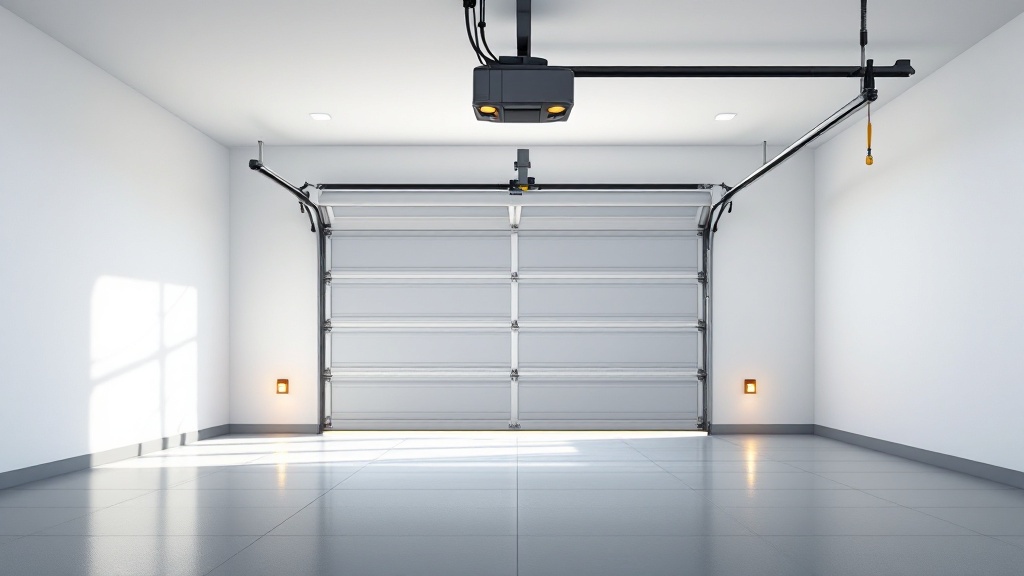
A chain-drive opener on a balanced, well-maintained door is quieter than a belt-drive opener fighting a door with weak springs and dry rollers. If your current opener sounds like a freight train, the opener might not be the problem. Why garage doors get loud is worth five minutes before you spend opener money.
Install quality is the other half. A properly hung rail with the limits and force set by gauge runs quieter than either drive type installed loose. This is why we test the whole door, not just the new motor.
What about screw drive and wall-mount
Screw-drive openers are the old middle ground: fewer parts, but more maintenance and more noise than a belt. You mostly see them in older San Antonio garages now. Wall-mount (jackshaft) openers skip the rail entirely and hang beside the door, which is the quietest setup and frees the ceiling. They cost more and need torsion springs. Full breakdown here: wall-mount openers.
What the drive types run, nationally
Nationally, most homeowners pay between $350 and $700 for a chain-drive opener installed, and between $450 and $850 for a comparable belt drive. Those are typical US ranges, not Summit quotes. Door height, horsepower, battery backup, and smart features all move the number. We quote the full price before work starts.
Belt vs chain questions
Is a belt drive strong enough for a double door?
Yes, in the right horsepower. A properly sized belt-drive opener handles a standard insulated double door without strain. The real question is door weight: heavy carriage-style overlay doors need the opener sized for the load regardless of drive type.
Can I swap my chain unit for a belt and keep the rail?
No. Chain and belt use different rails and trolleys, so the swap means the full opener and rail. The good news: the door itself, springs, and sensors usually stay.
How long do opener belts last?
Steel-reinforced belts routinely last the life of the opener on a balanced door, often 10 to 15 years. A belt that frays or slips early is usually a symptom of a heavy, unbalanced door, which is worth fixing for the opener’s sake and the springs’.
Your garage door won’t wait. Neither do we.
We keep same-day openings when the board allows. Either way: diagnosis first, written price second, then the fix.